Supplier selection · Working guide
OEM vs ODM vs Private-Label Furniture: A Buyer Decision Matrix
Choose the right furniture development route by comparing design ownership, engineering input, sampling, minimums, change control and commercial responsibility.
 MAVORA / BUYER NOTES / 2026
01
What is the practical difference between OEM, ODM and private label?
The practical difference is where the starting design comes from and how design, engineering, tooling, branding and reuse rights are divided between buyer and supplier.
| Route | Typical starting point | Buyer should clarify |
|---|---|---|
| Catalog / private label | Existing supplier model with buyer branding or selected finishes | Branding rights, market restrictions, available changes and repeat consistency |
| ODM adaptation | Supplier-originated model adjusted for the buyer | Which elements are shared, what becomes exclusive and who approves engineering changes |
| OEM / buyer-led build | Buyer drawing, sample or controlled design brief | Design rights, technical responsibility, tooling, validation and permitted reuse |
02
Which development route fits the order?
Match the route to the value of exclusivity, available development time, technical documentation, expected volume and the buyer's ability to make approvals.
A catalog adaptation is usually the clearest route when the silhouette and construction already fit. Changes to fabric, finish, configuration or branding still require sampling and written control, but they avoid rebuilding the whole product definition.
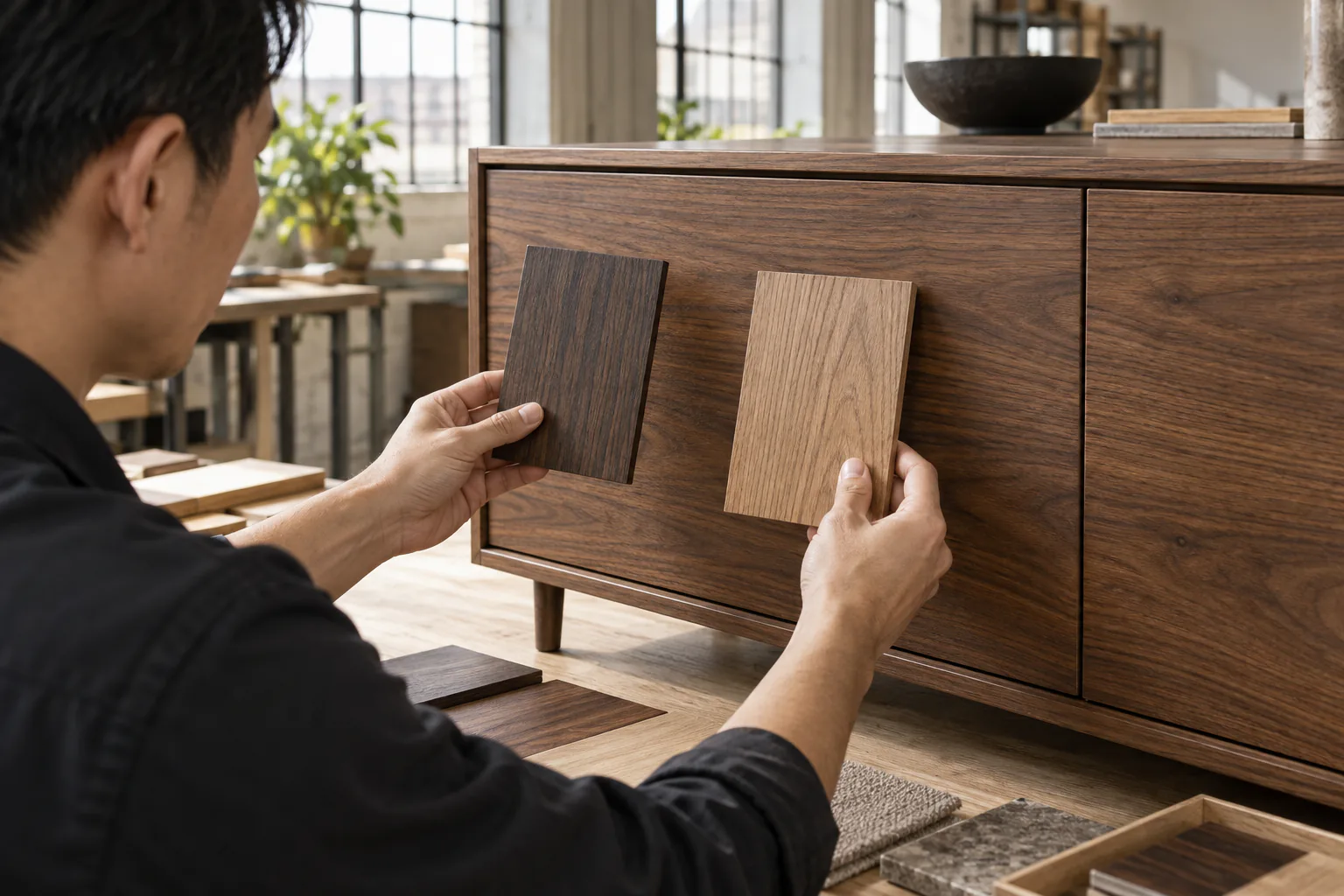
A buyer-led product requires a complete brief and an accountable technical review. A visual render alone cannot resolve joints, loads, tolerances, hardware, foam build-up, service access or export packaging. Budget for drawings, prototypes and revision cycles before promising a launch date.
03
What documentation should control a custom furniture order?
Use one approved specification set that connects the commercial order to drawings, materials, finishes, packaging and every accepted deviation.
- Dimensioned drawing with revision, units and tolerance notes.
- Bill of materials or material schedule naming the visible and structural components.
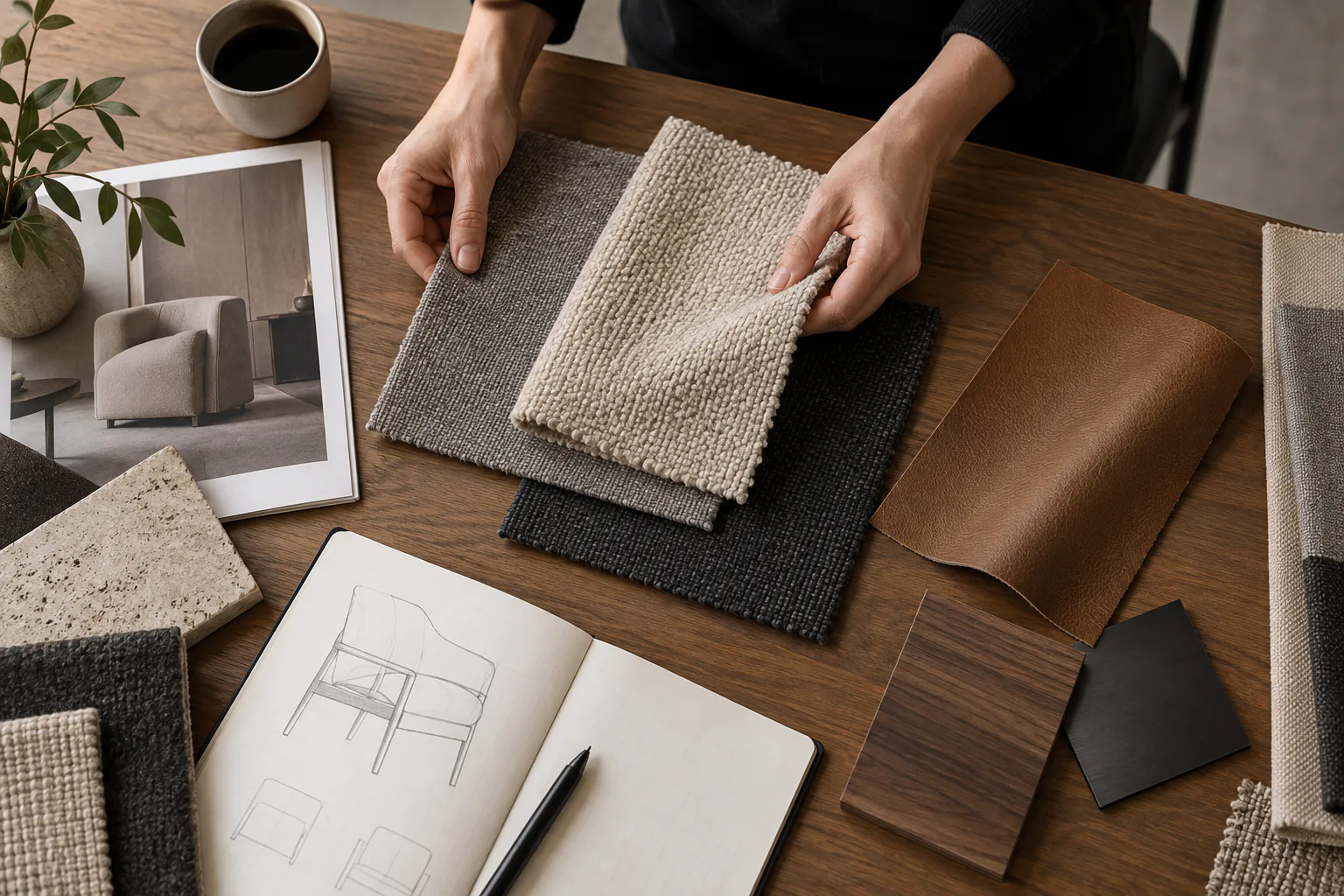
- Finish and upholstery references with an agreed boundary for natural variation.
- Hardware, labels, care information and branding requirements.
- Approved sample record with dated photos and signed exceptions.
- Packaging specification, assembly state and instructions.
- Change log showing cost, timing and approval impact.

04
How should design changes be approved?
No change should reach production until its effect on appearance, function, cost, lead time, packing and prior evidence has been documented and accepted.
Name who can approve technical and commercial changes. A substitute material may solve availability but change colour, weight, durability or regulatory evidence. A dimensional revision may alter carton size or assembly. Treat every change as a connected decision rather than an isolated email.
If exclusivity, ownership or tooling matters, define the market, duration, files, molds, payment, access and end-of-relationship handling in the contract. This guide cannot determine those rights for a particular jurisdiction.
Specific questions
Frequently asked questions
Is private-label furniture always exclusive?
No. A branding arrangement does not automatically create design or market exclusivity. State any exclusivity clearly in the agreement, including scope, geography, term and exceptions.
Does customization always require a new MOQ?
It may. The effect depends on the changed material, finish, component, setup and supplier purchasing minimum. Request the MOQ by configuration rather than assuming one number applies to the whole order.
Can a reference photo be used for OEM development?
It can communicate direction, but it is not enough to control manufacture and may raise third-party rights issues. Create original drawings and specifications, and obtain advice where ownership is uncertain.
Primary references
Sources and further reading
- Industrial design rights and territorial protectionWorld Intellectual Property Organization
Get quote
Apply the guide to a real furniture brief
Share the shortlist, quantities, destination, specification and timing so open assumptions can be identified.